

BIX-J5S-1 Airway Intubation Training Guide: Building Competency with Electronic Feedback
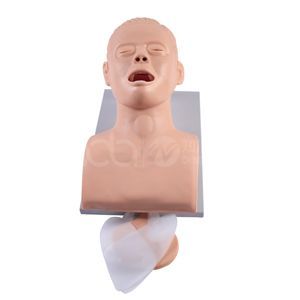
The BIX-J5S-1 is a compact (56×25×22 cm, 4 kg) airway intubation training model with electronic feedback for correct tube placement — dual-lung inflation display, music prompt on successful intubation, and warning alerts for esophageal intubation and excessive laryngoscopic pressure on teeth. It also includes pupil comparison and cricothyroid membrane puncture positioning. For institutional quotes and spare-part ordering, contact sophia@adahealthy.com
...
1. Who This Guide Is For
This guide is written for clinical skills instructors, anesthesiology program coordinators, paramedic educators, and simulation lab managers who train healthcare providers in adult endotracheal intubation. The BIX-J5S-1 is designed for classroom deployment — lightweight enough to carry between training stations, compact enough to store in standard laboratory cabinets, and equipped with electronic sensors that provide objective, real-time feedback without requiring a separate controller unit.
If you are training medical students, nursing students, paramedics, or respiratory therapists in oral and nasal intubation technique, this guide covers setup, correct operation validation, error recognition, and maintenance protocols.
2. Unboxing & Setup
What Is in the Box
● 1 × Adult airway intubation head and torso (56×25×22 cm)
● 1 × Pre-installed lung bag system (dual-lung)
● 1 × Electronic sensor module (integrated, no external controller)
● 1 × Power adapter (or battery compartment — verify with your shipment)
● 1 × Printed quick-start guide
Setup Sequence (Under 3 Minutes)
Position the model.
1. Place on a firm, flat surface at approximately the trainee's chest height. The base is weighted for stability — no clamp or mount required.
Connect power.
2. Plug in the AC adapter or insert batteries. The electronic display should illuminate briefly, then enter standby mode. No calibration is required — the sensors are factory-calibrated.
Verify feedback loop.
3. Insert a standard Macintosh laryngoscope blade, visualize the vocal cords, and pass a 7.0–8.0 mm endotracheal tube. The electronic display should show a green indicator, both lung bags should inflate, and a confirmation tone should sound. If the tube enters the esophagus, the stomach bag will inflate and a warning will display.
Test the alarm triggers.
4. Intentionally apply excessive pressure on the upper incisors with the laryngoscope blade. The teeth pressure warning should activate within 1–2 seconds. Intentionally pass the tube into the esophagus — the gastric inflation warning and stomach bag distention should activate.
The BIX-J5S-1 is now ready for training.
3. Training Protocol: Correct vs. Error Recognition
The BIX-J5S-1's defining training value is its ability to display both successful and erroneous intubation in real time. The most critical skill in airway management is not performing a correct intubation — it is recognizing when intubation has gone wrong and correcting it immediately. Undetected esophageal intubation has a mortality rate approaching 100% if not recognized within 90 seconds (Cook et al., 2011).
Action | Correct Outcome (J5S-1 Feedback) | Error Outcome (J5S-1 Feedback) | Clinical Consequence of Error |
Tube placement | Green display, music tone, bilateral lung inflation | Stomach bag inflates, warning display | Esophageal intubation — fatal if unrecognized |
Laryngoscope technique | No alarm | Teeth pressure alarm activates | Dental trauma — #1 anesthesia-related claim (Cook et al., 2011) |
Tube depth | Bilateral lung inflation, equal breath sounds | Unilateral inflation only | Right mainstem bronchus intubation — left lung collapse |
Airway positioning | Vocal cords visualized, smooth tube passage | Stomach inflation, no lung movement | Failed intubation → hypoxia |
Training Sequence (Recommended per Student)
Demonstration (5 min):
1. Instructor performs one correct intubation while narrating landmarks — vallecula, epiglottis, vocal cords, tracheal rings.
Guided Practice — Correct (10 min):
2. Student performs 3–5 intubations with instructor hand-over-hand guidance, focusing on blade technique and tube passage.
Guided Practice — Error Recognition (10 min):
3. Instructor positions the tube in the esophagus or applies excessive blade pressure; student must identify the error from the electronic feedback alone — without instructor verbal cues.
Independent Practice (15 min):
4. Student performs 10 unsupervised intubations. The electronic display provides all feedback. Instructor reviews error patterns afterward.
Nasal Intubation Module (10 min):
5. Student performs 3–5 nasal intubations using the nasal passage, which includes realistic turbinate anatomy.
A 2019 study by Kennedy et al. demonstrated that students using electronic-feedback trainers required 24% fewer attempts to achieve intubation competency compared to students using passive PVC models. The J5S-1's integrated display eliminates the subjective variability of instructor observation — every student receives identical, objective feedback on every attempt.
4. Additional Training Modules
Pupil Assessment
The BIX-J5S-1 includes adjustable pupils that can be set to normal or dilated positions. This enables training in:
● Baseline pupil size documentation before intubation
● Recognition of anisocoria (unequal pupils) as a sign of intracranial pathology
● Post-intubation pupil reassessment
Pupillary response is a component of the Glasgow Coma Scale and a standard post-intubation reassessment parameter per Advanced Trauma Life Support (ATLS) protocol.
Cricothyroid Membrane Puncture
The model includes a palpable cricothyroid membrane landmark for needle cricothyroidotomy training — the emergency surgical airway procedure indicated when intubation and ventilation both fail. The Difficult Airway Society guidelines (Frerk et al., 2015) mandate that all anesthesiologists and emergency physicians demonstrate competency in cricothyroid membrane identification and needle access.
5. Group Training Session Design
Class Size | Units Needed | Students per Unit | Rotation Interval | Intubations per Student (60-min session) |
6–12 | 2 | 3–6 : 1 | 10 min | 12–15 |
12–20 | 3 | 4–7 : 1 | 10 min | 10–12 |
20–30 | 5 | 4–6 : 1 | 10 min | 8–10 |
The Difficult Airway Society recommends a minimum of 25 supervised intubations before independent practice. For a 12-student cohort, allocate the J5S-1 across 2 training stations and 5 sessions per semester to meet this threshold.
6. Maintenance & Care
Interval | Action | Notes |
After each session | Wipe the face, oral cavity, and laryngoscope contact surfaces with 75% alcohol | Prevents surface contamination (Issenberg et al., 2005) |
After every 20 intubations | Flush oral and nasal airways with warm water; flush the esophageal path separately | Prevents lubricant and particulate buildup |
Monthly | Verify sensor calibration — insert a correctly placed tube and confirm green feedback; insert an esophageal placement and confirm warning | Non-passing sensor = return for service |
Quarterly | Inspect the silicone vocal cords and epiglottis for tears or deformation | Replacement vocal cord sets are available as consumables |
Annually | Replace the lung/stomach bag system regardless of visual condition | Elastic fatigue reduces feedback accuracy over time |
Teeth Pressure Sensor Care
The incisor contact sensor is the most sensitive component. Do not apply cleaning solvents directly to the teeth. Wipe with a dry cloth only. If the alarm no longer triggers at moderate laryngoscope pressure, contact sophia@adahealthy.com — the sensor may require recalibration or replacement.
7. FAQ
Q1: What is the difference between J5S-1 and J5S? A: The J5S includes a separate external controller unit with advanced data logging. The J5S-1 integrates the electronic feedback directly into the model — same sensors, same alarms, but in a compact, single-unit design optimized for classroom rotation. No external controller means fewer cables, faster station turnover, and lower per-unit cost.
Q2: What size endotracheal tubes are compatible? A: Standard adult ETT sizes 6.0–8.5 mm internal diameter. Laryngeal mask airways (LMA sizes 3–5) are also compatible. Pediatric tubes (<6.0 mm) will not create a sufficient seal for accurate lung inflation feedback.
Q3: Does the model support video laryngoscopy training? A: Yes. The airway anatomy — tongue, vallecula, epiglottis, vocal cords — is compatible with standard video laryngoscope blades (GlideScope, C-MAC, McGrath). The electronic feedback operates independently of the visualization method.
Q4: How many intubations can the vocal cord silicone withstand? A: Approximately 300–500 intubation cycles before visible wear. The vocal cord module is replaceable as a consumable. Replacement sets include the epiglottis, vocal cords, and tracheal rings.
Q5: Can the model be used for bronchoscopy training? A: The trachea accommodates a standard adult flexible bronchoscope (5.0–6.0 mm OD). Bronchoscopic visualization of the carina and mainstem bronchi is possible. However, the model does not include segmented bronchial anatomy — it is designed for intubation, not diagnostic bronchoscopy.
Q6: What is the MOQ and shipping timeline? A: Standard MOQ is 5 units. Sample evaluation units (1) are available. Air freight delivery is 7–10 business days. For training centers deploying 10+ units, email sophia@adahealthy.com for volume pricing and consumable bundling — including pre-configured spare-part kits with vocal cord sets, lung bags, and face skins.
References
Dental Trauma in Anesthesia — Cook et al. (2011)
Feedback-Based Airway Training Outcomes — Kennedy et al. (2019)
Difficult Airway Society Guidelines — Frerk et al. (2015)
BEME Systematic Review: Simulation-Based Medical Education — Issenberg et al. (2005)
AHA 2020 Guidelines for CPR and ECC (Airway Management Section)
ATLS Student Course Manual, 10th Edition — American College of Surgeons (2018)

Marketing Center
Hong Kong, ChinaProduction Base
Shanghai, ChinaProducts
Contact Us
 Address: Hong Kong, China
 Phone:+86 13383897707
 Email:sophia@adahealthy.com
 Mobile:+86-0379-65160607
举报邮箱:sophia@adahealthy.com
举报电话:+86 19937901373
Social Media