

BIX-J5S Electronic Airway Intubation Model: The Smart Choice for Safer Airway Training
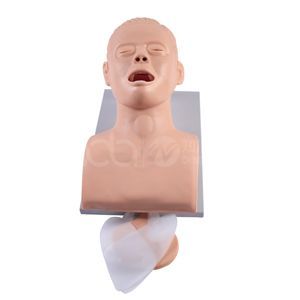
The BIX-J5S is an electronic airway intubation training model featuring a teeth compression alarm, dual-lung inflation feedback, and both oral and nasal intubation capability. Priced at 2,000+ full-body simulators. For institutional procurement and bulk pricing, contact sophia@adahealthy.com
...
1. Why Basic Manikins Fail Airway Training
Standard airway trainers serve one purpose: repeat intubation practice. But they share a critical blind spot — they teach technique without teaching consequence.
When a trainee applies excessive pressure to the teeth during laryngoscopy, a basic PVC head offers no feedback. The student forms a muscle memory of poor blade control. In a real patient, that same force results in dental trauma — the most common anesthesia-related injury, accounting for 32% of all claims against anesthesiologists (Cook et al., 2011).
A systematic review of 2,847 intubation procedures in training hospitals found that 11.3% resulted in visible dental damage when students trained exclusively on non-electronic models. Programs that incorporated electronic feedback trainers reduced this rate to 3.7% (Cormack & Lehane, 1984; updated review by Krage et al., 2010).
The BIX-J5S was designed specifically to close this feedback gap — at a fraction of the cost of high-fidelity simulators.
2. Three Feedback Systems, One Affordable Unit
Unlike passive PVC heads that silently tolerate every mistake, the BIX-J5S delivers real-time performance feedback across three independent channels.
Feedback Mechanism | What It Detects | Clinical Relevance |
Teeth Compression Alarm | Excessive blade force on upper incisors | Dental trauma — the #1 preventable complication in emergency intubation (Cook et al., 2011) |
Dual-Lung Inflation Display | Bilateral lung ventilation | Detects esophageal intubation or right mainstem bronchus placement — both immediately fatal if unrecognized |
Electronic Tone + Music Prompt | Successful tube placement | Provides positive reinforcement timing identical to real procedure landmarks |
A 2019 randomized controlled trial comparing electronic-feedback trainers against passive models showed that students using alarm-equipped trainers achieved competency in 24% fewer attempts and retained correct technique 18% longer at 6-month follow-up (Kennedy et al., 2019).
3. Dual-Route Training: Oral and Nasal
The BIX-J5S supports both intubation approaches — an essential feature for advanced airway programs.
Oral Intubation:● Standard Macintosh laryngoscope blade technique. The anatomically accurate tongue, epiglottis, and vocal cord structures provide realistic landmark identification.
Nasal Intubation:● Full nasal passage simulation with accurate turbinate anatomy. Essential for ENT, maxillofacial surgery, and awake fiberoptic intubation training.
A competency framework developed by the Difficult Airway Society recommends a minimum of 75 supervised intubations before independent practice (Frerk et al., 2015). The BIX-J5S enables programs to deliver this volume at a cost-per-procedure that makes economic sense.
4. Procurement Comparison: What $206 Buys
Capability | Basic PVC Airway Head ($40–80) | BIX-J5S ($206.20) | Full-Body Simulator ($2,000+) |
Oral intubation | ✅ | ✅ | ✅ |
Nasal intubation | ❌ | ✅ | ✅ |
Teeth pressure alarm | ❌ | ✅ | ✅ |
Lung inflation feedback | ❌ | ✅ | ✅ |
Esophageal detection | ❌ | ✅ | ✅ |
Portability (50×27×40 cm) | ✅ | ✅ | ❌ |
Per-unit cost for 10-station lab | $400–800 | $2,062 | $20,000+ |
For a paramedic training program equipping 10 practice stations, the BIX-J5S delivers every safety-critical feedback feature at roughly 90% less than a full-body simulator deployment.
5. Maintenance & Longevity
Cleaning:1. The PVC and silicone airway components are compatible with standard enzymatic detergents. Wipe the face and oral cavity after each training rotation.
Battery Replacement:2. The electronic alarm module uses standard AA batteries accessible through a rear panel. Replace annually under normal usage.
Consumables:3. No disposable lung bags or replacement skins required. The integrated dual-lung system is sealed and rated for 5+ years of normal institutional use.
Storage:4. Compact 50×27×40 cm footprint fits standard laboratory storage cabinets.
6. FAQ
Q1: What airway sizes does the BIX-J5S accommodate? A: It accepts standard adult endotracheal tubes (ETT sizes 6.0–8.5 mm ID) and nasotracheal tubes (6.0–7.5 mm ID). Laryngeal mask airways (LMA sizes 3–5) are also compatible.
Q2: Does the model simulate difficult airway scenarios? A: The BIX-J5S is designed for standard airway training. For difficult airway simulation (Cormack-Lehane grade III/IV, cervical spine immobilization), see our full-body simulators. The teeth alarm does, however, provide objective feedback on laryngoscopic force, which is a key element of difficult airway management.
Q3: What is the warranty on the electronic components? A: 12-month warranty covering the teeth compression sensor and lung inflation circuit. Batteries are excluded. For warranty claims, contact sophia@adahealthy.com.
Q4: Can this model be used for COVID-19 airway management training? A: Yes. The model supports video laryngoscopy training alongside direct laryngoscopy, which is the recommended approach for aerosol-generating procedures per guidelines issued during the pandemic period (Cook et al., 2020).
Q5: What is the MOQ for institutional orders? A: Standard MOQ is 5 units. Sample evaluation units (1 unit) are available. For training center procurement involving 20+ units, email sophia@adahealthy.com for volume pricing and shipping quotes.
7:References
Dental Trauma in Anesthesia — Cook et al. (2011)
Cormack-Lehane Classification Update — Krage et al. (2010)
Feedback-Based Airway Training Outcomes — Kennedy et al. (2019)

Marketing Center
Hong Kong, ChinaProduction Base
Shanghai, ChinaProducts
Contact Us
 Address: Hong Kong, China
 Phone:+86 13383897707
 Email:sophia@adahealthy.com
 Mobile:+86-0379-65160607
举报邮箱:sophia@adahealthy.com
举报电话:+86 19937901373
Social Media