

BIX-CPR160A Guide: Teaching Neonatal CPR with Digital Feedback, Voice Alarms, and the 3:1 Ratio
Article tag: BIX-CPR160A CPR160A
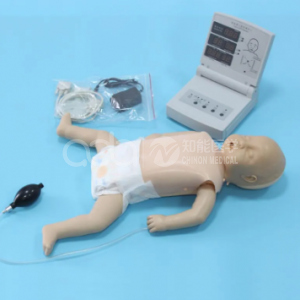
A training guide for the BIX-CPR160A neonatal CPR manikin ($500.78) — AHA 2020-compliant with 3:1 compression-to-ventilation ratio, digital counting, indicator lights, and voice alarms for compression position, compression depth (≥4 cm), and tidal volume (30–50 ml). Includes session scripts, assessment mode setup, and maintenance. For institutional support, contact sophia@adahealthy.com
...
Product Description
Model | BIX-CPR160A — Neonatal CPR Training Manikin |
Summary | AHA 2020-compliant newborn CPR trainer with digital counting, indicator lights, and voice alarms for compression position, depth (≥4 cm), and ventilation (30–50 ml). 3:1 ratio, training + assessment modes, manual carotid pulse. $500.78. (157 chars) |
Standard | AHA 2020 CPR & ECC Guidelines |
Ratio | 3:1 (compressions:ventilation), 15 cycles |
Frequency | 100–120 compressions/min |
Feedback | Digital count + indicator lights + voice alarms |
Power | 220V AC → 5V regulator |
Price | USD $500.78 |
1. Why Neonatal CPR Training Is Different
Neonatal resuscitation is the one CPR context where the ratio is not 30:2 — it is 3:1. Every 3 compressions are followed by 1 ventilation, reflecting the priority of ventilation over circulation in newborns: most neonatal cardiac arrests are secondary to respiratory failure, and the neonatal myocardium depletes its glycogen reserves within 90 seconds of asphyxiation (Ersdal et al., 2012).
This difference makes neonatal CPR training on adult manikins actively harmful — students internalize the 30:2 rhythm and must unlearn it. The BIX-CPR160A is purpose-built for the neonatal algorithm: 3:1 ratio enforced by the model's feedback system, 100–120 compressions per minute, and a newborn airway anatomy that requires different head positioning than adults.
The stakes are documented: approximately 10 million newborns require assistance to initiate breathing at birth each year, and birth asphyxia accounts for 23% of neonatal deaths (Lawn et al., 2014). Training on the correct ratio — not a generalized adult protocol — is the first line of defense.
2. Three-Channel Digital Feedback
The BIX-CPR160A provides objective, real-time feedback across the three parameters that define neonatal CPR quality:
Channel | Detection | Feedback | Clinical Relevance |
Compression position | Correct vs. incorrect hand placement | Indicator light + voice alarm + digital count | Compressions on the wrong location (e.g., xiphoid) fail to generate cardiac output and risk organ injury |
Compression depth | ≥4 cm (correct) vs <4 cm (insufficient) | Green/red indicator + digital count + voice alarm | Newborn depth guidance: one-third of AP chest diameter; shallow compressions fail to restore coronary perfusion |
Ventilation volume | <30 ml (insufficient), 30–50 ml (correct), >50 ml or too fast (gastric) | Indicator + digital count + voice alarm | Excessive tidal volume causes gastric insufflation and regurgitation — a leading cause of failed neonatal ventilation (Aufderheide et al., 2004) |
Every error produces a voice alarm stating the specific cause — not just a generic beep. This verbal feedback lets a single instructor supervise multiple stations simultaneously, because students hear exactly what they did wrong and can self-correct.
3. Training Protocols
Protocol A: 3:1 Ratio Mastery — 25 min
Objective: Perform 15 complete 3:1 cycles at 100–120 compressions/min with correct position, depth, and ventilation volume.
Phase | Time | Trainee Action | Feedback Expected |
Demo | 3 min | Instructor demonstrates 3:1 cycles | Green indicators throughout |
Ratio practice | 10 min | 5 full cycles; count compressions aloud | Digital counter verifies ratio |
Depth focus | 5 min | 3 cycles emphasizing ≥4 cm depth | Green indicator on correct depth |
Ventilation focus | 5 min | 3 cycles emphasizing 30–50 ml breaths | Correct-volume indicator |
Debrief | 2 min | Review counter totals | Compare with target |
Protocol B: Assessment Mode — 15 min
Objective: Document skill competence using the model's assessment mode.
1. Switch the model to
assessment operation mode
.
2. Student performs 15 complete 3:1 cycles.
3. The digital counter records: correct compressions, incorrect compressions (position + depth), correct ventilations, gastric-insufflation events.
4. Instructor reviews counts against the pass threshold: ≥90% correct compressions and ≥90% correct ventilations.
A 2017 study by Kamath-Rayne et al. found that electronic feedback reduced neonatal compression depth errors by 47% and ventilation rate errors by 38% within three training sessions — the assessment mode provides the objective record this improvement is measured against.
Protocol C: Carotid Pulse Assessment — 5 min
The manual carotid pulse simulator (rubber bulb) trains students to:
● Assess pulse presence before starting compressions
● Reassess pulse every 30 seconds during CPR
● Correlate pulse strength with compression effectiveness
4. Group Session Design
Class Size | Units | Students per Unit | Rotation | Total Time |
6–8 | 2 | 3–4 : 1 | 15-min stations | 90 min |
8–16 | 4 | 3–4 : 1 | 4 stations (ratio/depth/ventilation/assessment) | 90 min |
16–24 | 6 | 3–4 : 1 | 4 parallel stations | 90 min |
The voice-alarm feature is the key to high unit-to-instructor ratios: students self-correct from verbal feedback, freeing the instructor to rotate between stations.
5. OSCE Station Design
Station | Time | Task | Pass Criteria |
1. Ratio | 10 min | 15 cycles of 3:1 at correct rhythm | Counter: no ratio errors |
2. Position | 8 min | 10 compressions at correct location | No position alarms |
3. Depth | 8 min | 10 compressions ≥4 cm | ≥90% green indicators |
4. Ventilation | 8 min | 10 breaths within 30–50 ml | ≥90% correct-volume indicators |
5. Pulse + assessment | 10 min | Pulse check + full assessment run | Counter record meets threshold |
6. Maintenance & Care
Interval | Action |
After each session | Wipe face skin and chest with 75% alcohol |
Every 20–30 trainees | Replace lung bag |
Monthly | Verify voice alarms and indicator lights; test all three channels |
Quarterly | Full inspection: airway, seals, power regulator |
Annually | Replace lung bag and face skin; verify regulator output (5V) |
Important: The model operates on 220V AC through a 5V regulator. Use only the supplied power adapter. Do not immerse any electronic component in liquid. For consumables and service: sophia@adahealthy.com.
7. FAQ
Q1: Why is the ratio 3:1 and not 30:2? A: Neonatal resuscitation prioritizes ventilation — most neonatal arrests are respiratory in origin. The 3:1 ratio delivers more frequent ventilations while still generating coronary perfusion from compressions. Training on the correct neonatal ratio prevents the dangerous transfer of adult 30:2 muscle memory.
Q2: What is the correct compression depth for a newborn? A: One-third of the anteroposterior chest diameter — approximately 4 cm on the CPR160A's sensor. The model's indicator confirms ≥4 cm as correct; <4 cm triggers the error alarm.
Q3: What tidal volume should students target? A: 30–50 ml. Ventilation below 30 ml triggers an insufficient-volume alarm; above 50 ml or too fast triggers the gastric-insufflation alarm.
Q4: Does the model support both training and assessment modes? A: Yes. Training mode provides continuous feedback during practice. Assessment mode records counts for objective skill evaluation — the digital counter provides the pass/fail record.
Q5: How is this different from the BIX/ACLS150? A: The ACLS150 is a seven-module comprehensive system (airway, ECG, defibrillation, auscultation, vital signs). The CPR160A is a focused neonatal CPR trainer — the right choice when your need is specifically the 3:1 CPR algorithm with digital feedback at $500.78.
Q6: What is the MOQ and delivery timeline? A: Standard MOQ is 5 units. Sample evaluation units (1–2) are available. Air freight: 7–10 business days. For 10+ unit orders, email sophia@adahealthy.com for volume pricing and consolidated shipping.
References
Delivering Effective Ventilation at Birth — Ersdal et al. (2012)
Global Causes of Neonatal Death — Lawn et al. (2014)
Impact of Feedback on Neonatal CPR Quality — Kamath-Rayne et al. (2017)
Hyperventilation During CPR — Aufderheide et al. (2004)
AHA 2020 Guidelines for Neonatal Resuscitation
Neonatal Resuscitation Guideline — Wyckoff et al. (2015)

Marketing Center
Hong Kong, ChinaProduction Base
Shanghai, ChinaProducts
Contact Us
 Address: Hong Kong, China
 Phone:+86 13383897707
 Email:sophia@adahealthy.com
 Mobile:+86-0379-65160607
举报邮箱:sophia@adahealthy.com
举报电话:+86 19937901373
Social Media