
ADA416 Infant CPR Manikin Review: What a Basic Infant Trainer Actually Fixes
Article tag: infant CPR training manikin ADA416 review infant BLS trainer two-thumb technique practice
ADA416 Infant CPR Manikin Review: What a Basic Infant Trainer Actually Fixes
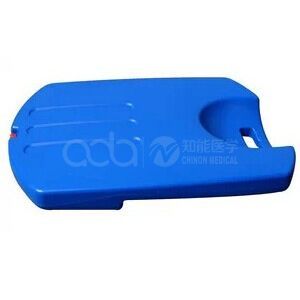
An infant CPR manikin earns its place by doing one job well: letting a rescuer rehearse two-thumb compressions and rescue breaths on a body the right size, repeatedly, until the rhythm is automatic. The ADA416 is positioned as exactly that — an infant CPR training manikin for classroom and refresher use, without pretending to be a full simulation system.

Quick facts
| Item | Detail |
|---|---|
| Model | ADA416 |
| Category | Infant CPR training manikin |
| Primary drill | Chest compressions and rescue breaths on an infant-sized body |
| Technique focus | Two-thumb-encircling hands; two-finger alternative |
| Setting | BLS classes, nursing schools, hospital refresher sessions, community training |
| Electronics | Confirm with supplier before ordering if you need compression feedback |
| Price | Quoted per order — request the current price list |
Why infant CPR deserves its own manikin
Adult and infant resuscitation are not the same skill scaled down. Compression depth targets, hand placement, and the rescuer's grip all change, and the evidence on technique is specific to infants. In a randomised study of 69 certified providers, real-time feedback improved infant manikin CPR quality by up to 79% [1] — which tells you two things: infant CPR performance is measurably improvable, and measurement is where the gain comes from.
Technique choice matters just as much. A crossover study of 27 healthcare providers found the two-thumb-encircling hands technique more advisable than the two-finger technique for a lone rescuer, because the two-finger approach may not reach the guideline compression depth [2]. If your course still teaches two-finger first and two-thumb second, the manikin session is the place to correct that order.
What the ADA416 does well
It makes the grip physical. Two-thumb technique fails silently on a slide: the thumbs drift off the sternum, the fingers stop encircling the thorax, and the rescuer does not notice. On an infant-sized torso, the wrong grip produces visibly poor compressions, so correction happens in the moment.
It supports ventilation practice. Rescue breaths on an infant require a small, controlled volume and a visible chest rise. A dedicated infant manikin lets trainees practise the seal-and-rise sequence without borrowing an adult trainer and imagining the scale.
It keeps classes affordable. Not every programme needs a feedback-equipped simulator for a 20-minute community course. A basic trainer plus a good instructor ratio often delivers more total learning than one high-end unit shared by twelve people.
Where a basic trainer limits you
A manikin without instrumentation cannot tell a trainee whether depth reached 4 cm or rate stayed at 110 per minute. That is not a flaw in the product — it is a specification decision you should make consciously. If your curriculum requires quantitative assessment, either pair the ADA416 with an external compression-feedback device or ask the supplier whether a feedback version exists before you standardise on this model.
The second limitation is scenario depth. The ADA416 is a skills trainer, not a scenario platform: there is no monitor, no rhythm generator, no airway complication. For team-based infant resuscitation with a monitor and rhythm changes, you need a different product tier.
A 20-minute drill that works with one manikin
- Two minutes — position and grip. Each trainee demonstrates two-thumb placement and verbalises the landmarks.
- Three minutes — rate and recoil. Thirty compressions at 100–120 per minute, full recoil, counted aloud by a partner.
- Three minutes — ventilation. Two breaths, visible rise, no gastric inflation.
- Six minutes — 30:2 cycles. Three full cycles per trainee, rotating every 90 seconds to limit fatigue.
- Six minutes — test and debrief. Each trainee performs one cycle unaided; the instructor scores grip, depth estimate, rate, and breath volume.
With eight trainees and two manikins, this runs in about 45 minutes including changeover — which is the realistic planning unit, not 20.
Procurement checklist
- Decide on feedback first. Instrumented or basic — this single choice determines whether the ADA416 fits your assessment model.
- Confirm the airway type. Ask whether the manikin uses disposable lung bags or replaceable airways, and price 100 units of consumable.
- Check the face/skin replacement cost. Repeated ventilation practice wears the face seal; replacement faces are a recurring line item.
- Ask for the carry weight. Community programmes carry manikins between sites; a case and a sub-5 kg unit matter more than they sound.
- Request a sample unit. Run one class before committing to a cohort-sized order.
FAQ
Q1. Is the ADA416 suitable for AHA-aligned infant BLS courses?
It is an infant CPR training manikin for compression and ventilation practice, which is the core of infant BLS skills stations. Confirm with your training partner whether their course requires an instrumented manikin for assessment.
Q2. Does it provide compression-depth feedback?
The listing describes an infant CPR training manikin; it does not specify electronic feedback. If feedback is required for your course, confirm the specification in writing before ordering.
Q3. Can it be used for two-finger technique as well as two-thumb?
Yes — both grips can be practised, which makes it useful for teaching why the two-thumb technique is preferred for a lone rescuer [2].
Q4. What consumables should we budget for?
Disposable lung bags or airways and replacement faces are the usual wear items. Ask for a cost-per-100-trainee estimate together with the quotation.
Q5. How many manikins for a class of 12?
Two manikins with one instructor per station keeps hands-on time above 50%. One manikin for 12 trainees turns the session into a demonstration.
Q6. How do we get current pricing and shipping?
Email sophia@adahealthy.com with the quantity, your city and the course type; you will receive the price list, carton dimensions and a delivery estimate.
References
- Sutton RM, et al. Real-time feedback can improve infant manikin cardiopulmonary resuscitation by up to 79% — a randomised controlled trial. Resuscitation. 2013. PMID 23571117.
- Kim YS, et al. Two-thumb-encircling hands technique is more advisable than 2-finger technique when lone rescuer performs cardiopulmonary resuscitation on infant manikin. American Journal of Emergency Medicine. 2015. PMID 25667159.
Contact
For the specification sheet, consumable pricing and a class-size quotation: sophia@adahealthy.com. Production follows ISO 45001 management practice; CE documentation is available for EU procurement.
Marketing Center
Hong Kong, ChinaProduction Base
Shanghai, ChinaProducts
Contact Us
 Address: Hong Kong, China
 Phone:+86 13383897707
 Email:sophia@adahealthy.com
 Mobile:+86-0379-65160607
举报邮箱:sophia@adahealthy.com
举报电话:+86 19937901373
Social Media