

BIX-Z10A Auscultation & Palpation Simulator: Teaching Guide
Article tag: BIX-Z10A auscultation and palpation simulator cardiopulmonary auscultation trainer heart and lung so
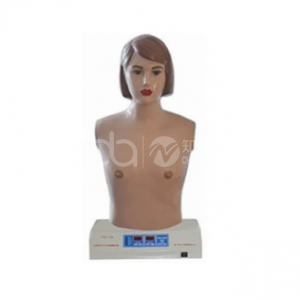
One all-in-one unit for cardiopulmonary auscultation and palpation: heart sounds, murmurs, rales and friction rubs, plus a built-in assessed-question mode.
...
BIX-Z10A Guide: Teaching Cardiopulmonary Auscultation and Palpation on One Unit
Short answer: The BIX-Z10A is a compact cardiopulmonary auscultation and palpation simulator. A microcomputer, a simulator board, a keyboard, a mouse and a loudspeaker are built into a single unit, so one station can play back normal heart sounds, abnormal heart sounds, cardiovascular murmurs, pericardial friction, precordial tremor, pathological breath sounds, wet and dry rales and pleural friction — and then score a student on where each sign is found and how it is described.
Key takeaways
- One integrated machine: microcomputer, simulator, keyboard, mouse and loudspeaker in a single case
- Reproduces normal and abnormal heart sounds, cardiovascular murmurs, pericardial friction, precordial tremor, pathological breath sounds, wet and dry rales, pleural friction and vocal tremors
- Loop playback with a stable, non-degrading tone for long practice sessions
- Built-in skill-assessment function: the teacher calls up a sign by keyboard number, the student identifies and describes it, and the teacher grades the performance
- Small footprint and light weight, so it fits a desk or a small examination-skills room
- Packing: 1 unit per carton; package size 51 × 41 × 85 cm; gross weight 12 kg
What the Z10A reproduces
| Sign group | Examples played back by the unit |
|---|---|
| Heart sounds | Normal heart sounds; various abnormal heart sounds |
| Murmurs and rubs | Various cardiovascular murmurs; pericardial friction |
| Palpation findings | Precordial tremor; pericardial friction |
| Breath sounds | Various pathological breath sounds |
| Adventitious sounds | Wet and dry rales; pleural friction |
| Voice-related signs | Vocal (verbal) tremors |
Why auscultation needs deliberate practice, not more lectures
Auscultation is a skill that is taught quickly and then assumed. The evidence says it should not be. In the multicentre assessment by Mangione and Nieman, 453 physicians in training and 88 medical students listened to 12 cardiac events recorded directly from patients. On average the internal medicine and family practice residents correctly identified only about 20% of the events, with median cumulative scores of 2.5 and 2.0 out of 12, and accuracy improved little from year to year — the residents were not significantly better than the medical students [1].
A later multicentre study went further and tested 860 participants across the whole training spectrum: medical students, residents, cardiology fellows, faculty and private practitioners. Cardiac examination skills did not improve after the third year of medical school and could decline with years in practice. In the same cohort, specificity for systolic murmurs was only 0.35 and sensitivity for diastolic murmurs 0.49 [2].
The stakes are not academic. Cardiovascular disease remains the leading cause of death worldwide: an estimated 19.8 million people died from cardiovascular disease in 2022, roughly 32% of all global deaths, and 85% of those deaths were due to heart attack and stroke [3]. A clinician who cannot reliably separate an innocent murmur from a pathological one, or a pleural rub from a rale, is working with a blunted instrument at the bedside.
That is the argument for a simulator rather than more slides. A student cannot make a patient produce the same murmur on demand, twenty times, in the same position. The Z10A can. Deliberate practice requires a signal that repeats exactly — and the unit's loop playback is designed so the sound does not drift in quality over a long session.
Running a session with the Z10A
- Establish a baseline first. Start with normal heart sounds and normal breath sounds so students fix the reference sound before abnormal signs are introduced.
- Discrimination drills. Play paired signs — for example a systolic murmur against a pericardial friction rub — and ask students to state the timing, the location and the character of each.
- Pair sound with touch. The unit also simulates precordial tremor and pericardial friction for palpation, so a station can teach the percussion-palpation-auscultation sequence as one continuous routine rather than three unrelated skills.
- Use the scored assessment mode. The assessment function is called up by keyboard number: students answer the location and characteristics of the sign they hear, and the teacher records the result. This converts a listening exercise into a measurable competency check.
- Build an OSCE-style circuit. Because the unit is self-contained, several stations can run in parallel in one room without a patient, a stethoscope bank or a multimedia setup.
What to check before you order
- Sign library and language. The product page lists a description and a package-size sheet plus an instruction manual download. Ask the sales team for the current sign list and the language of the prompts and manual, and check it against your own curriculum before you commit.
- Assessment scope. Confirm whether the scored assessment function covers both auscultation and palpation findings in your required depth.
- Siting and handling. The shipping carton measures 51 × 41 × 85 cm at 12 kg gross, so the unit can be moved and stored by one person — but plan a permanent bench if you intend to run assessment circuits.
- Price. This page does not publish a price; the unit is quoted on request. Ask for the current price list, lead time and any bundled accessories.
FAQ
Q1. What is the BIX-Z10A used for?
It is a cardiopulmonary auscultation and palpation simulator used to teach and assess the identification of heart sounds, murmurs, friction rubs, abnormal breath sounds, rales and tremors — typically in clinical-skills labs, nursing schools and physical-diagnosis courses.
Q2. Does it need a separate computer or speaker?
No. The microcomputer, simulator, keyboard, mouse and loudspeaker are integrated into one machine, which is what keeps the cost and the footprint down.
Q3. Which signs does it simulate?
Normal and abnormal heart sounds, various cardiovascular murmurs, pericardial friction, precordial tremor, various pathological breath sounds, wet and dry rales, pleural friction and vocal tremors.
Q4. Can it be used for assessment, not just teaching?
Yes. The assessment function is invoked by keyboard number: the student listens, answers the location and characteristics of the sign, and the teacher evaluates the performance.
Q5. Does the sound degrade after long use?
The manufacturer specifies loop playback that does not distort, which matters for repeated assessment sessions on the same sign.
Q6. How do I get a price list or a demonstration?
Email sophia@adahealthy.com with the model (BIX-Z10A), the quantity you are considering and your destination port; our export team will reply with pricing, lead time and the configuration details.
Request a quotation
Email sophia@adahealthy.com for the BIX-Z10A price list and shipping details. If your programme covers emergency care as well as diagnosis, the same line includes full-function nursing and first-aid simulators and CPR training manikins, so auscultation practice, nursing skills and resuscitation can be specified in a single purchase.
References
- Mangione S, Nieman LZ. Cardiac auscultatory skills of internal medicine and family practice trainees: a comparison of diagnostic proficiency. JAMA. 1997;278(9):717–722
- Vukanovic-Criley JM, Criley S, Warde CM, et al. Competency in cardiac examination skills in medical students, trainees, physicians, and faculty: a multicenter study. Archives of Internal Medicine. 2006;166(6):610–616
- World Health Organization. Cardiovascular diseases (CVDs) fact sheet. 2025

Marketing Center
Hong Kong, ChinaProduction Base
Shanghai, ChinaProducts
Contact Us
 Address: Hong Kong, China
 Phone:+86 13383897707
 Email:sophia@adahealthy.com
 Mobile:+86-0379-65160607
举报邮箱:sophia@adahealthy.com
举报电话:+86 19937901373
Social Media